

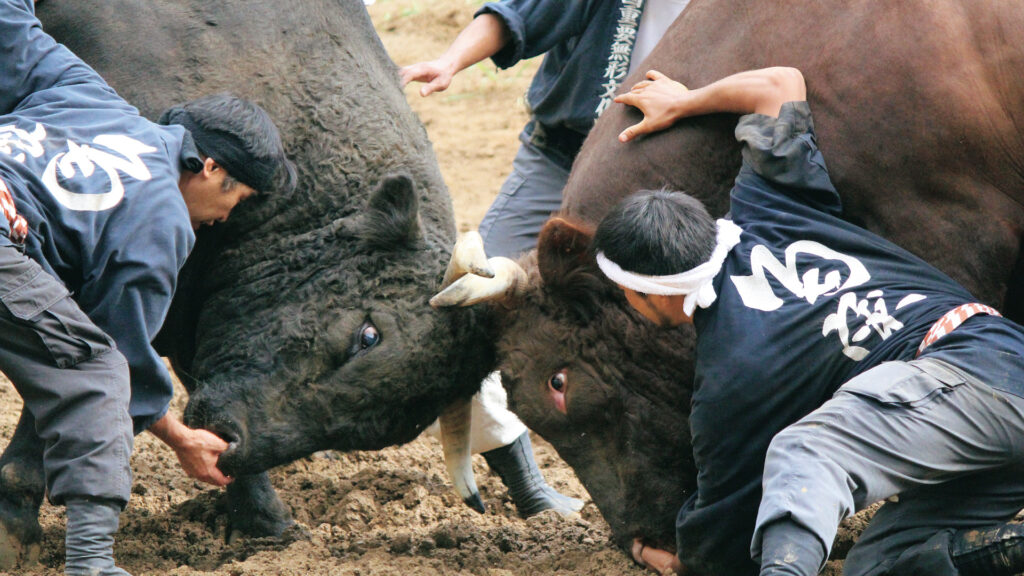
Bull Sumo Wrestling
The breathtakingly vigorous matches are a Shinto ritual with a history that stretches back over 1,000 years
Interviewee
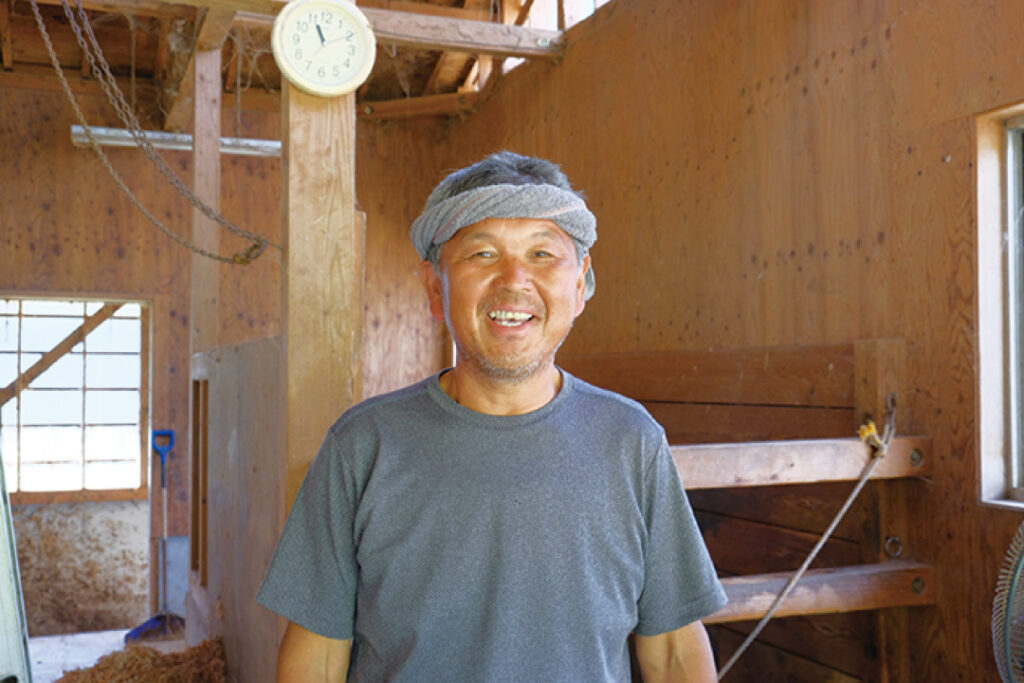
Mr. Ryuichi Hirasawa
Ojiya Bullfight PromotionCouncil Chairperson
In charge of taking care of bulls in the joint shed for bullfighting and school bulls. He has been a seko (handler) for more than 40 years.
Traditional culture in the area is preserved and handed down
Bull Sumo Wrestling in the former Nijyumurago was designated a National Important Intangible Folk Cultural Property in 1978. With Ojiya bullring as the stage, bull owners, seko (handler), members of the committee and all others involved liven up the venue to heat up the match. We talked to Mr. Ryuichi Hirasawa, chairperson of the Ojiya Bullfight Promotion Council.
– What are the features of Bull Sumo Wrestling in Higashiyama?
Mr. Hirasawa
The first rule of the Nijyumurago is that there is no winner or loser in the fight. This is to avoid allowing our precious bulls to get hurt. About 30 sekos or handlers take charge of each fight, and announce a draw at the good part of the fight. In about 1978, when the bullfighting was designated cultural asset, many bulls were being raised in Higashiyama. Bulls that were nurtured as members of the family are put in the bullring and all the villagers root to make it an exciting event.
– What is the appeal of Bull Sumo Wrestling? How do people enjoy it?
Mr. Hirasawa
Bulls debut in the bullfights at the age of three. It’s fun to see your favorite bull and watch it grow. We get excited seeing the bulls becoming strong. Five days before the fight, The Bullfight Committee gathers and decides on banzuke (ranking). There is live commentary on the day of the bullfight, making it easy for beginners to enjoy the fights. Nowadays, some people enjoy watching young seko grow to be master seko.
– Tell us about your dream.
Mr. Hirasawa
As depopulation progresses, I feel it is important to have many people come to see the event in order to continue with this culture. There are people coming from Akita Prefecture or the Kanto area, and there is also a lady who comes here regularly to take care of the bulls. It’s our pride to see people who love bulls gather here. My wish is that bull enthusiasts like us raise bulls so that they do not become extinct, and we protect and hand down traditional culture of the region. Higashiyama Elementary School raises school bulls. I would like to hand down the appealing aspects of bullfight to children of the next generation.
Ojiya Bullring
2453 Koguriyama, Ojiya City Phone: 0258-83-3512(Ojiya City Lively Exchange Division )
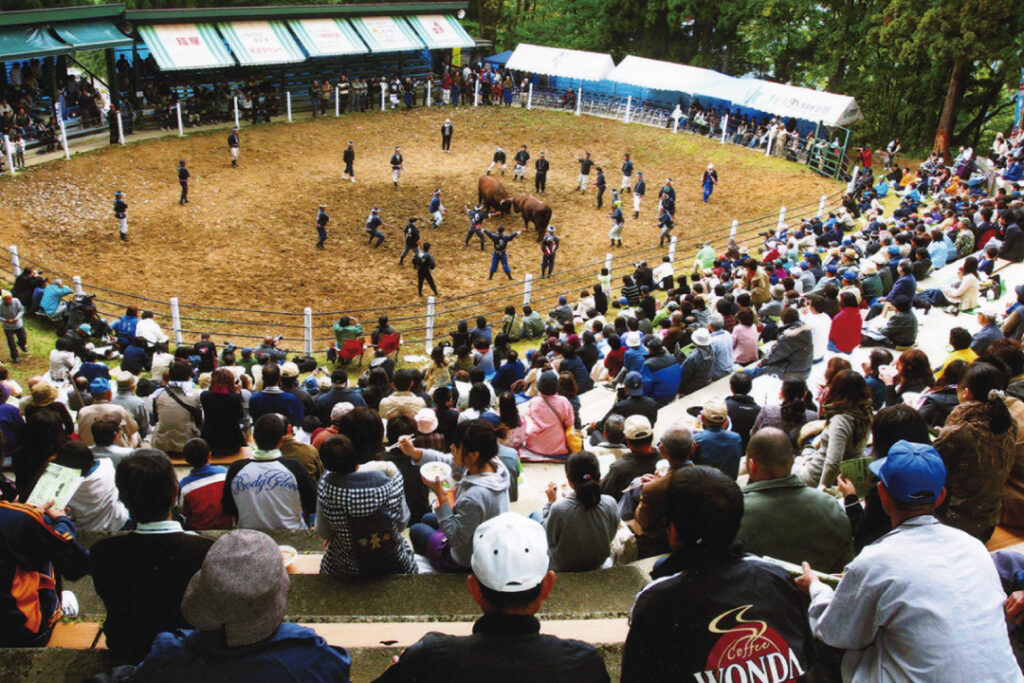
●Held once a month from May to November12:00 p.m.–3:00 p.m. (Ring open at 10:00 a.m.)
Admission: 2,000 yen
25 min. from Kan-etsu Expressway Ojiya IC