
Nishikigoi Carp
The swimming jewels attracting attention in- and outside of Japan
Interviewee
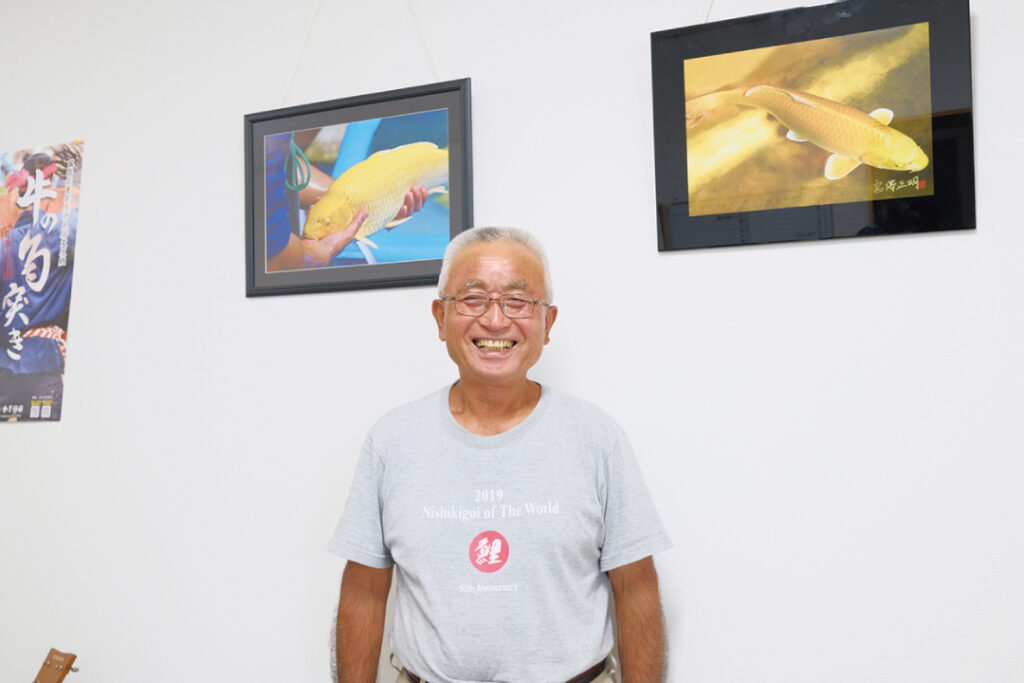
Mr. Senichi Mano
Director of Izumiya Koi Farm
Loves nishikigoi carp and bullfights. He was the chairperson of the Ojiya Bullfight Promotion Council until 3 years ago.
Desire to raise jewels of the region.Striving to be Higashiyama, the sacred place of nishikigoi carp
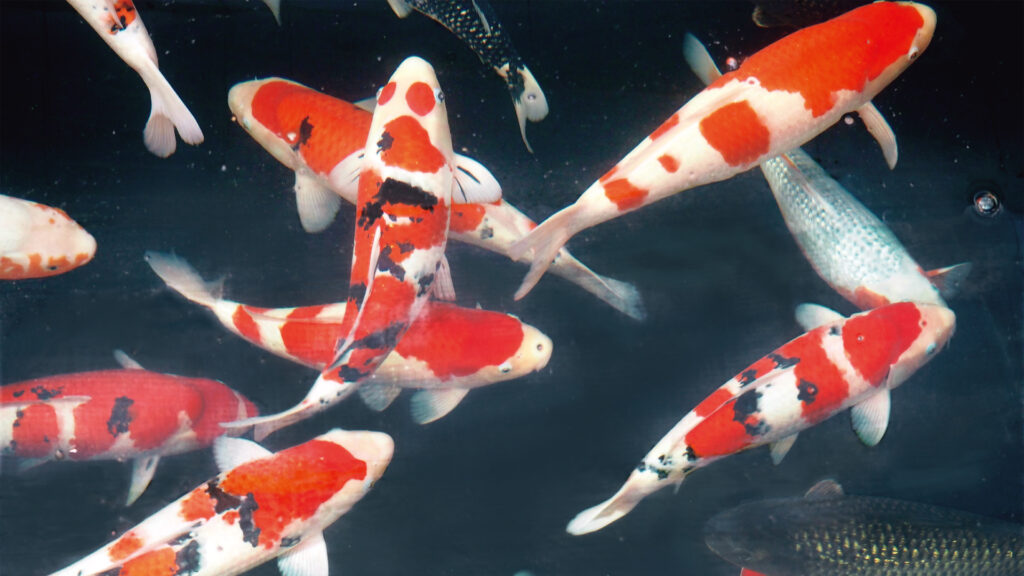
Nishikigoi fans spread throughout the world. We talked to Mr. Senichi Mano, Director of Izumiya Koi Farm, who has been involved in the aquaculture of nishikigoi in the birthplace of nishikigoi since his grandfather’s generation.
– What is the reason Higashiyama’s nishikigoi became famous?
Mr. Mano
The Higashiyama Village chief led in the exhibition of carp raised in Niigata at the Taisho Exposition held in 1914 at Ueno, Tokyo. At the time, the carp was named kawarigoi (unique carp). I heard that the young Showa Emperor liked the carp so much that he didn’t want to part from them, so eight carp were presented to the emperor. This led "Kawarigoi from Echigo" become known nationwide.
– They are now attracting attention worldwide.
Mr. Mano
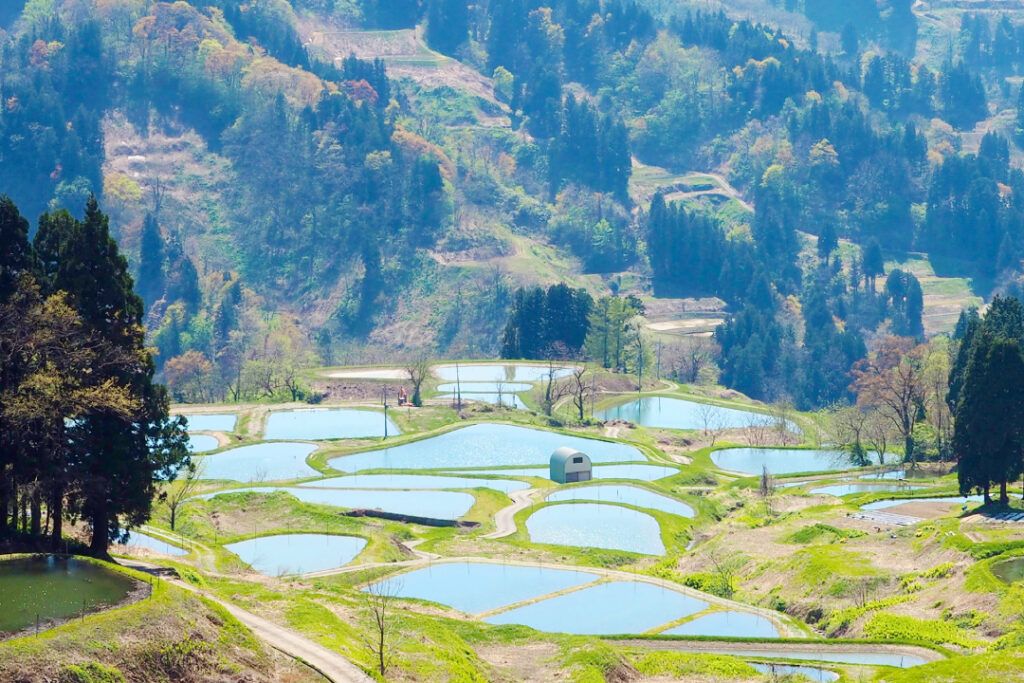
We have a lot of snow here, and because of it the soil is fertile. This soil is important for carp aquaculture. In the olden days, a pond was dug at the top of a terraced paddy field to store water for rice cultivation, and also to raise young nishikigoi carp. Microorganisms in the paddy fields were feed for the young fish. In autumn, water in the paddy field became low, rice became ripe, so nishikigoi were scooped out. Higashiyama had been raising nishikigoi carp by this method. During the high growth period when the Tokyo Olympics were held, orders for nishikigoi from the Tokyo metropolitan area increased, and all households in this district were raising nishikigoi.
– How do you raise carp today?
Mr. Mano
When you say aquaculture, you might have an image of a small space packed with fish; but, it’s nothing like that. From spring to autumn, carp are raised in spacious ponds to store water for rice cultivation, with the ratio of about 5–6 carp per tan equal to one-tenth of a hectare. Raising carp in mountain ponds with natural surroundings is possible in Higashiyama.
– What is the appeal of nishikigoi aquaculture?
Mr. Mano
You can raise your own unique nishikigoi. There is fun in bringing out new breeds. Our specialty, yamabuki, is popular overseas. I’m so happy.
– Tell us about your dream.
Mr. Mano
Many quit nishikigoi aquaculture after the Niigata Chuetsu Earthquake and the spread of koi herpesvirus. We took over the ponds of these people, but responding to inspections is a big job these days. We continue because we are raising the treasure of the community. Aiming for Higashiyama to be called the sacred place of nishikigoi, I say to all producers, “Let’s create new breeds and highlight Higashiyama nishikigoi to the world.
Nishikigoi Production
Spring
(March–early May)
Preparation of the pond
Summer
(Late May–August)
Egg collection, production of young fish, sortingRelease young fish into the pond for breeding
Autumn
(September–November)
Grown nishikigoi is scooped out of the pondSome are exhibited at exhibitions
Winter
(December–February)
Protected in a heated indoor facility
NishikigoiAuction Market
Nishikigoi carp are placed in a container called fune and floated down the waterway in the auction venue. The auctioneer’s powerful call “2,000 ryo! 3,000 ryo!” from the auctioneer’s booth called the bandai rings out in the venue. Here, visitors can see middlemen and carp lovers assessing carp’s growth and their beautiful pattern to make bids.*Currently public show of the auction market is opened only to this tour.
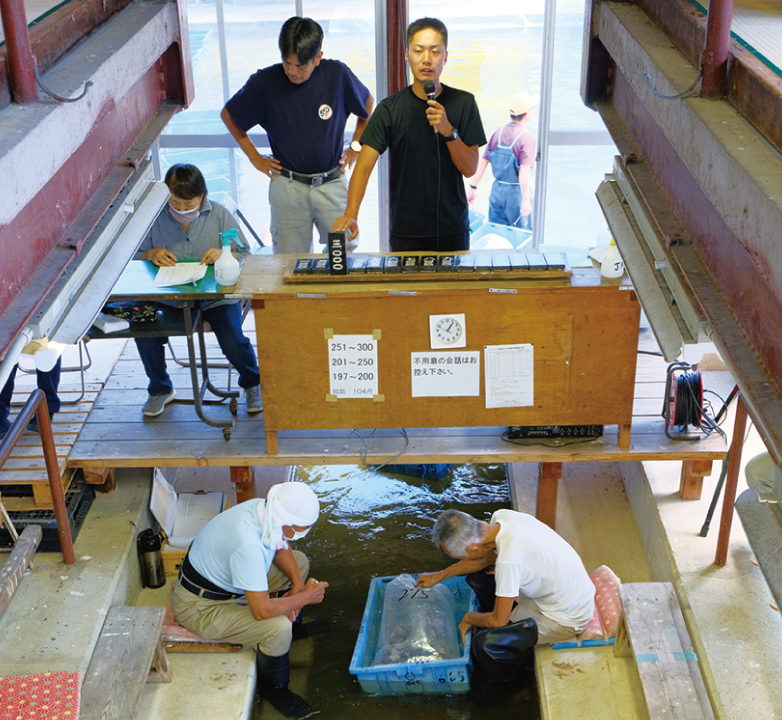
JA Echigo-Ojiya Nishikigoi Market
3396 Minami-Nigoro, Ojiya City
Phone: 0258-59-3440
Open regularly on Fridays from April to November (Closed from July to September)
20 min. from Kan-etsu Expressway Ojiya IC